


Every Italian region has at least a handful of signature wines that define the place for enthusiasts. Abruzzo, in central Italy, is no exception. I’d like to highlight one in particular, Cerasuolo D’Abruzzo (a real mouthful to pronounce, so just remember “cherries” for now). It’s a great example of how Abruzzese winemakers are meeting changing consumer preferences by digging deeper into regional traditions instead of inventing or borrowing something new.
First let’s start with the region. Abruzzo is not as well known or well-visited as many other Italian regions. That’s strange, because it’s only an hour or so east of Rome on the autostrada. It’s also blessed with three spectacular national parks and large wild nature preserves. The Abruzzese apennines feature the highest Italian peaks south of the alps. Castles, hilltop villages and stunning vistas abound. For the ocean-minded, Abruzzo’s Adriatic coast features sandy beaches, towns perched on seaside bluffs, and quaint fishing huts called trabocchi that double as over-water seafood hangouts.
The region also has warm, welcoming people, about whom “un popolo forte e gentile (strong and kind), is an apt description. Abruzzesi people are proudly traditional, hardy, resilient and good-natured. Their often inhospitable mountainous terrain, along with millennia of being battered and bruised by external forces, have made them stoic, hard-working, and able to endure their lot in life with good humor. And of course they’re passionate about food and wine. The local cuisine is hearty and delicious and Abruzzo’s winemaking tradition is long. Little wonder there’s always a picquante Abruzzese proverb, delivered in dialect, to punch home the point: Fa cchiù mmeràcule ’na votte di vine, che ’’na cchjìese de sànde. A barrel of wine creates more miracles than a church full of saints.
Italian wine producers, similar to others worldwide, feel the impact of declining wine consumption, faltering sales, and changes in consumer wine preferences. Instead of tried-and-true international whites and heavy reds, younger drinkers want interesting local whites, lighter, chillable reds, and rosés. Lots of rosés. Good winemakers adapt to face these new challenges. Interestingly enough, Abruzzo required less adaptation: some of their traditional wines, relatively unchanged, fall right into the new sweet spot of consumer demand. This allowed them to pivot nimbly to capture the market’s attention.
Cerasuolo D’Abruzzo is arguably Italy’s best rosé wine, and it’s first DOC Rosé. It’s made from the native red Montepulciano D’Abruzzo grapes (note: these are different than Tuscan Vino Nobile di Montepulciano, which is Sangiovese-based). Cerasuolo is a long-time Abruzzese mainstay, but only in the late 20th century did it come out from the shadows of the other local wines to gain renown outside its home region.
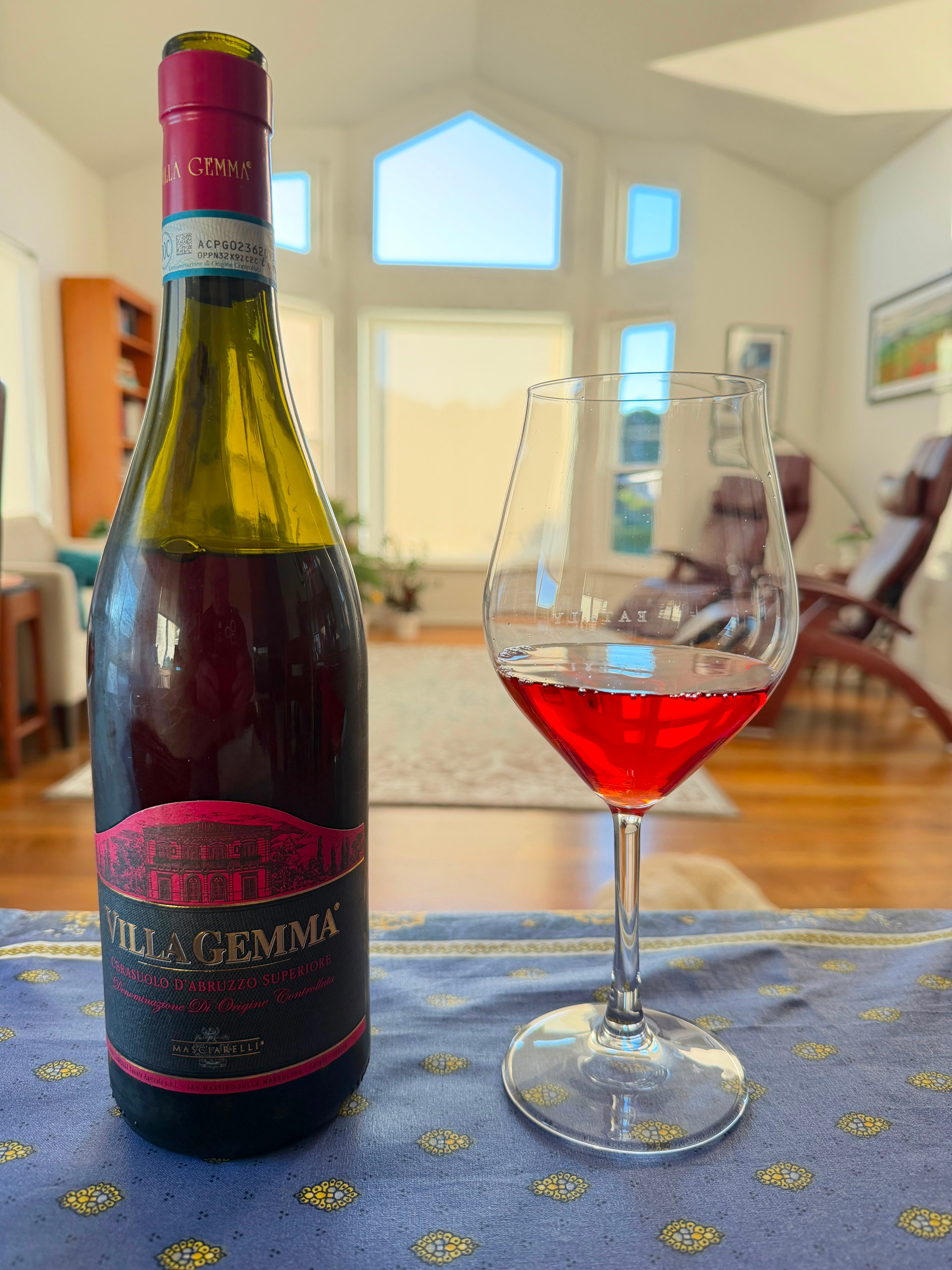
Cerasuolo technically is a rosé, although many Abruzzesi view it just as a lighter red that combines the freshness of a rosé with the robustness of a red Montepulciano. It has little in common with the delicate, pale provençal rosés some people drink at poolside. Instead it’s a darker cherry-red color (“cerasa” means cherries), dry, medium bodied, slightly tannic, complex and more intensely flavorful. Leaving the juice in contact with the red Montepulciano grape skins for about a day before fermentation gives it the added body, color and flavors.
And what flavors! Strawberries, dried cherries, raspberries, pomegranate, orange peel, cinnamon, and wildflowers, all delivered with crisp acidity and a hint of minerality. This wine has brio! This is perfect for a moment yearning for lighter or chillable reds during warmer months.
Cerasuolo is great as a stand-alone aperitivo. But its body and flavor make it extremely versatile as a food accompaniment. The list of good food pairings is long: salads, fish, white meats, cheeses and salumi, pizza, pastas with tomato-based sauces, BBQ, even local abbruzzese dishes such as arrosticini or lamb. And the list doesn’t end at Italy’s borders: try this wine with fusion dishes, Thai and Korean, Ceviche and curries. It’s best when consumed young.
A number of producers operate locally in Abruzzo and their availability in high street store or big box wine stores may be limited. However they are more readily found online, and are very affordable. I’d suggest starting with the Villa Gemma Cerasuolo d’Abruzzo from Masciarelli. A perfect and award-winning entry point, priced around $18 - $22 online.
Have a hankering for something new that’s also very old? Give Cerasuolo D’Abruzzo a try. And then you too can start repeating Abruzzese proverbs such as Fatte nu bicchire che te passe: Drink and you will be cured.
 | A guest post by
|